Why was Near Eastern bitumen buried with a ship at Sutton Hoo?
Read the original source · PLOS ONE · Chemical analysis of the Sutton Hoo fragments
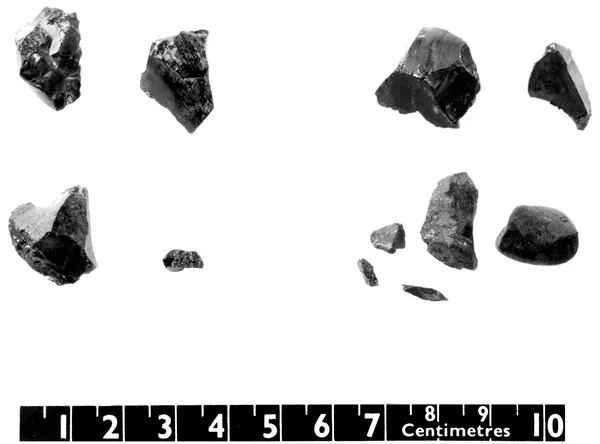
Some of the Sutton Hoo fragments analyzed by Burger and colleagues. Researchers compared molecular and isotope evidence with reference material from Britain and the Near East.
Burger et al. (2016), PLOS ONE, figure 3 (CC BY 4.0, resized) · License
Source summary
Black fragments from the seventh-century ship burial were once identified as pine tar. New chemical analyses identified bitumen and found its molecular signature most consistent with Near Eastern sources, possibly Syria. The fragments’ positions inside the chamber suggest they belonged among the grave goods. Their original purpose and the route that brought them to England remain open.