Five tests of the universe’s origin →
We ran five checks against published observations to see whether the leaderboard should move.
Origin Question ranks the leading explanations for how the universe began. We weigh evidence from any source readers can verify and update the leaderboard as new findings come in.
Browse current and past featured articles from Origin Question, with links to the original research and images.
We ran five checks against published observations to see whether the leaderboard should move.
What telescopes and their teams have observed.
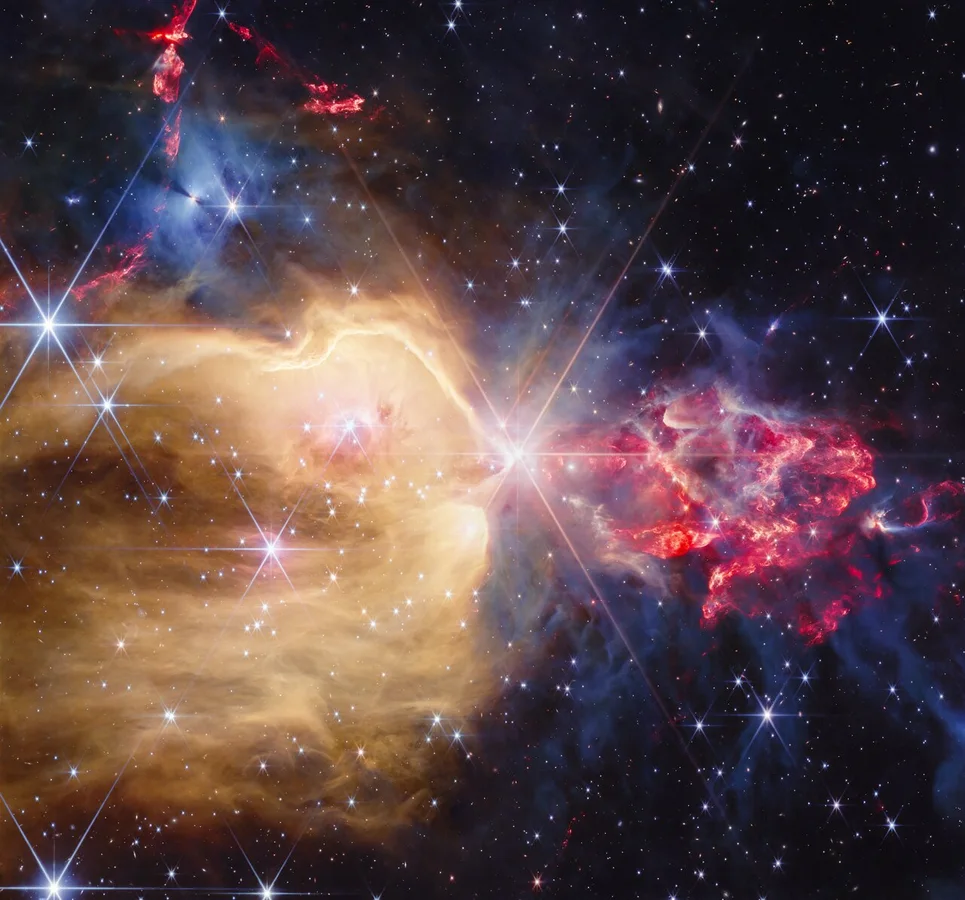
Webb’s infrared view of the NGC 7129 stellar nursery.
NASA, ESA, CSA, STScI; Image Processing: A. Pagan (STScI) · License
NASA’s November 16 image feature revisits Webb’s infrared view of NGC 7129. The image shows young stars and knots of glowing material where their jets interact with the cloud, giving astronomers a way to study how newborn stars reshape their surroundings.
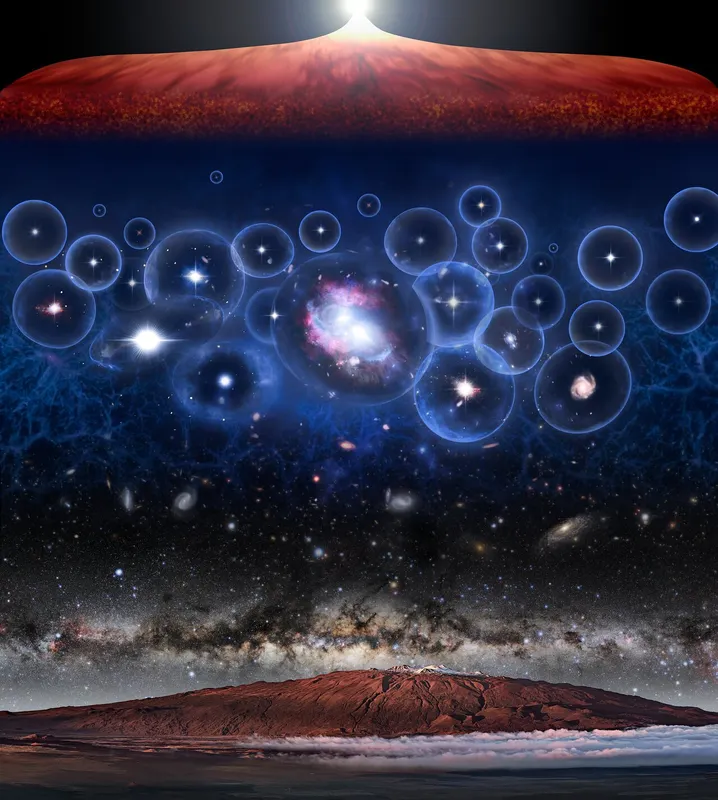
Artist’s impression of the ancient quasar pair above Maunakea.
International Gemini Observatory/NOIRLab/NSF/AURA/P. Marenfeld/M. Zamani · License
Astronomers reported a close quasar pair, two bright objects powered by growing black holes, seen about 900 million years after the Big Bang. It raises a question about how both black holes grew so quickly.
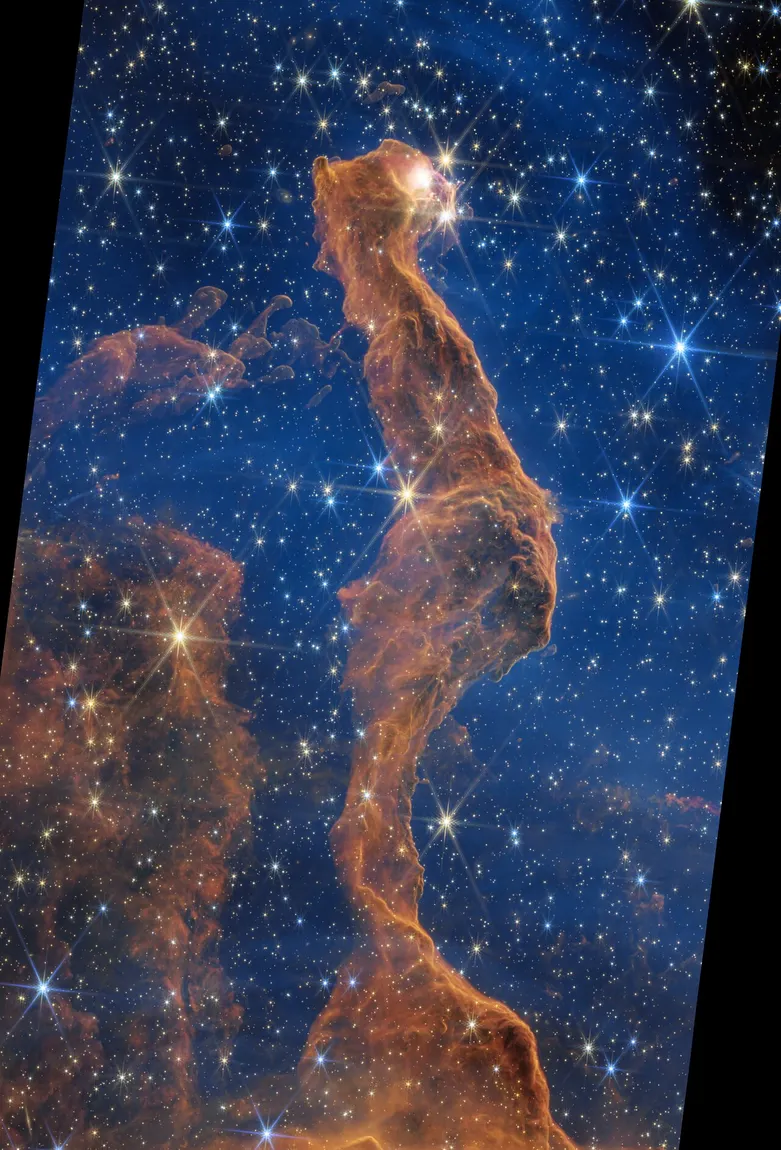
Webb’s near-infrared view of the Cat’s Head Nebula.
NASA, ESA, CSA, STScI. Image Processing: J. Depasquale (STScI) · License
The telescopes looked at the same star-forming cloud in different wavelengths. The views reveal different layers of dust and stars in the Carina Nebula.
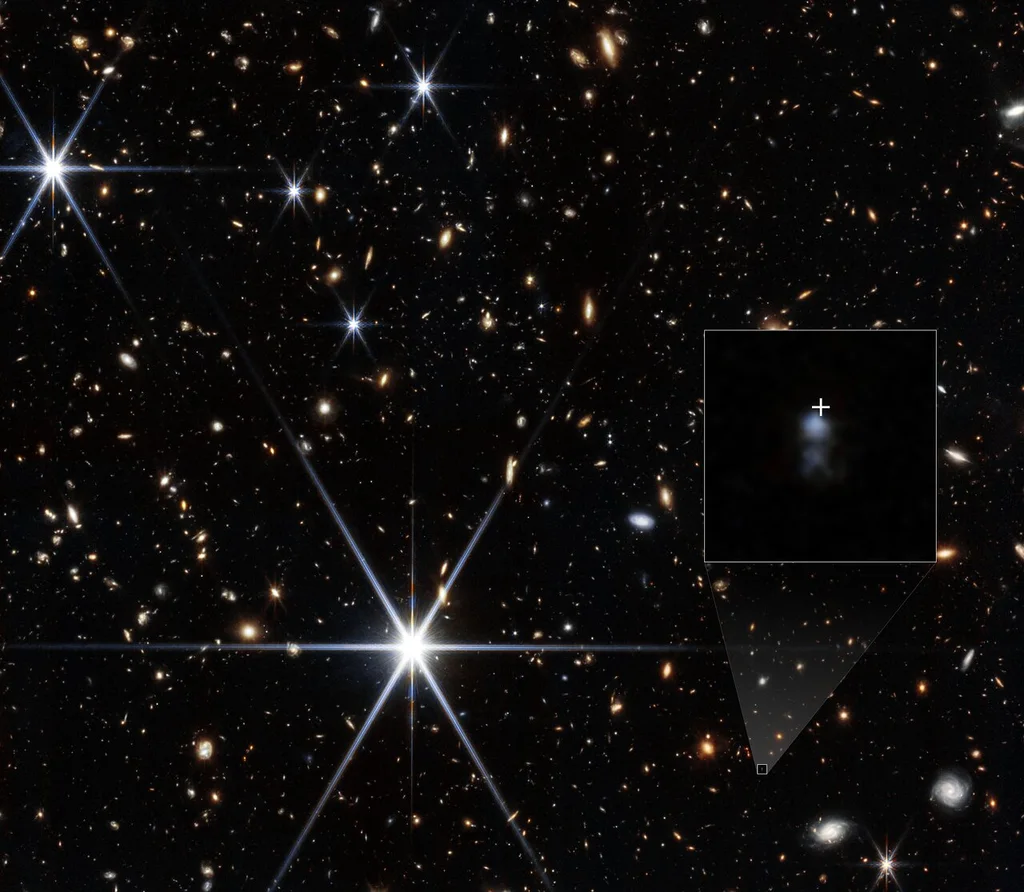
Webb’s view of the host of FRB 20240304B, with the burst position marked.
NASA, ESA, CSA, STScI, T. Nanayakkara (USYD). Image Processing: J. DePasquale (STScI) · License
Webb located the host galaxy of FRB 20240304B. Its light puts the burst about three billion years after the Big Bang, making it the most distant known fast radio burst at the time of the report. Its host offers clues about the source, whose identity remains uncertain.
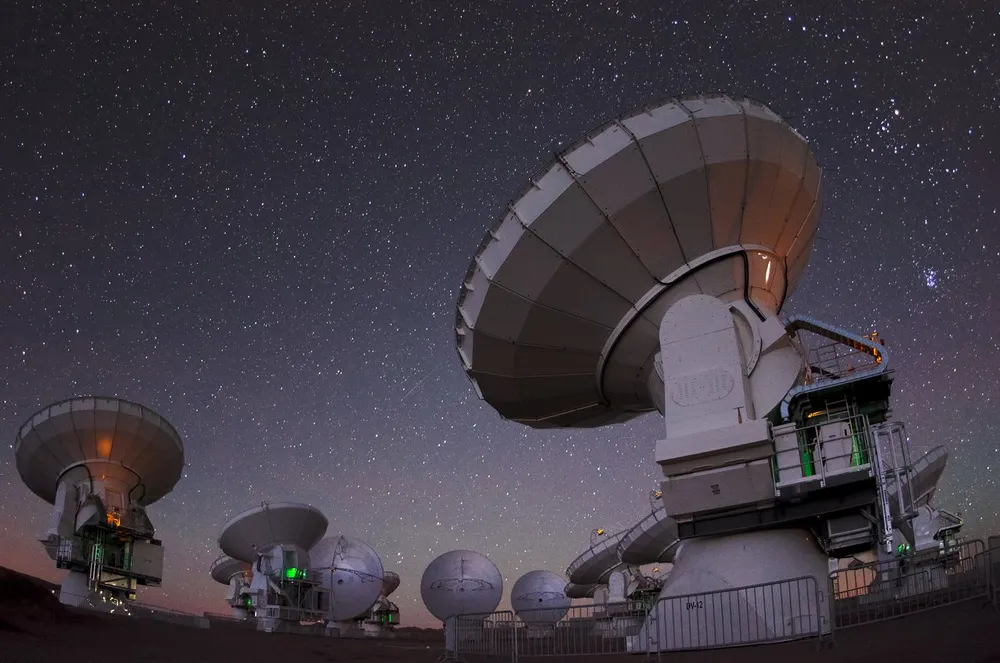
The ALMA dishes that pick up faint signals from star-forming clouds.
ALMA detected rare forms of methanol around stars still forming. The finding helps trace how organic molecules form before planets take shape. It is a finding about chemistry.
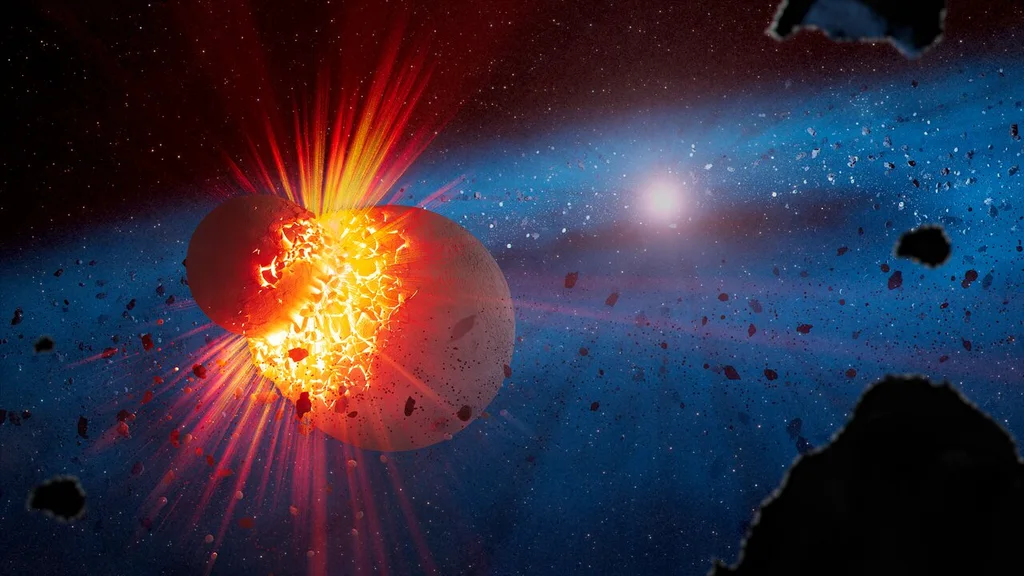
Artist’s concept of a collision inside an extreme debris disc.
Webb measured the chemistry of dust around young stars. Some discs had silica-rich material consistent with collisions energetic enough to vaporize rock. Researchers infer the likely size of the colliding bodies from the debris; Webb did not see the impacts themselves.
What researchers measured, modeled, or are still trying to test.
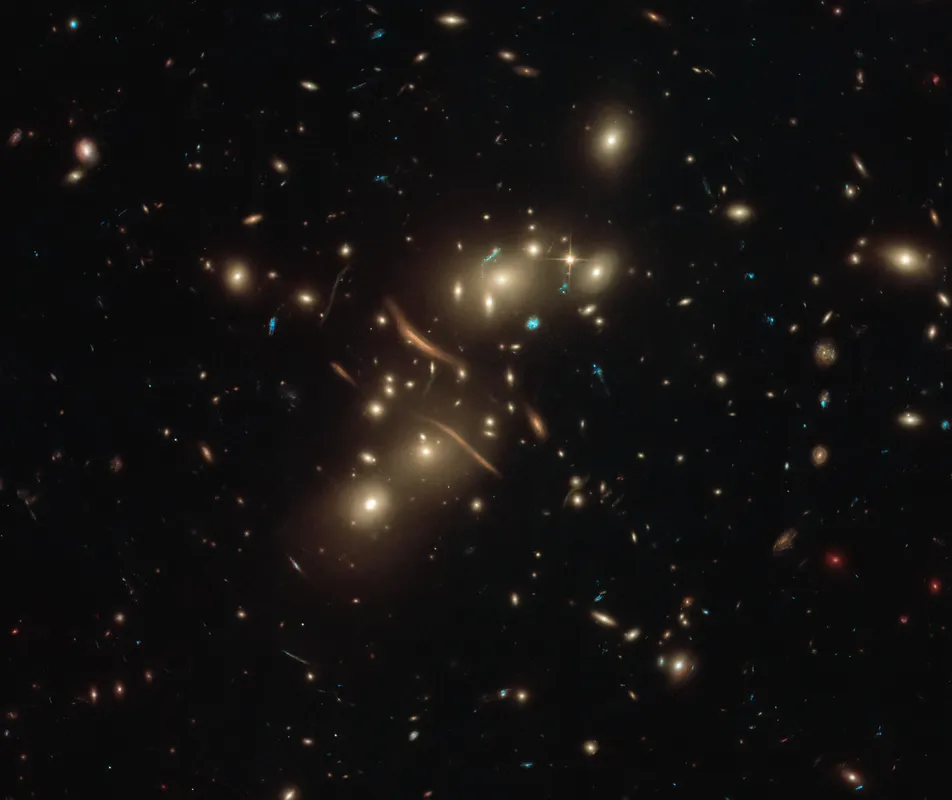
An example of gravity bending light. Holography is a separate theoretical question.
Sabrina Gonzalez Pasterski works on celestial holography, a way to describe gravity using math on a two-dimensional boundary. Researchers are developing that description. It hasn’t been confirmed as an explanation of our universe.
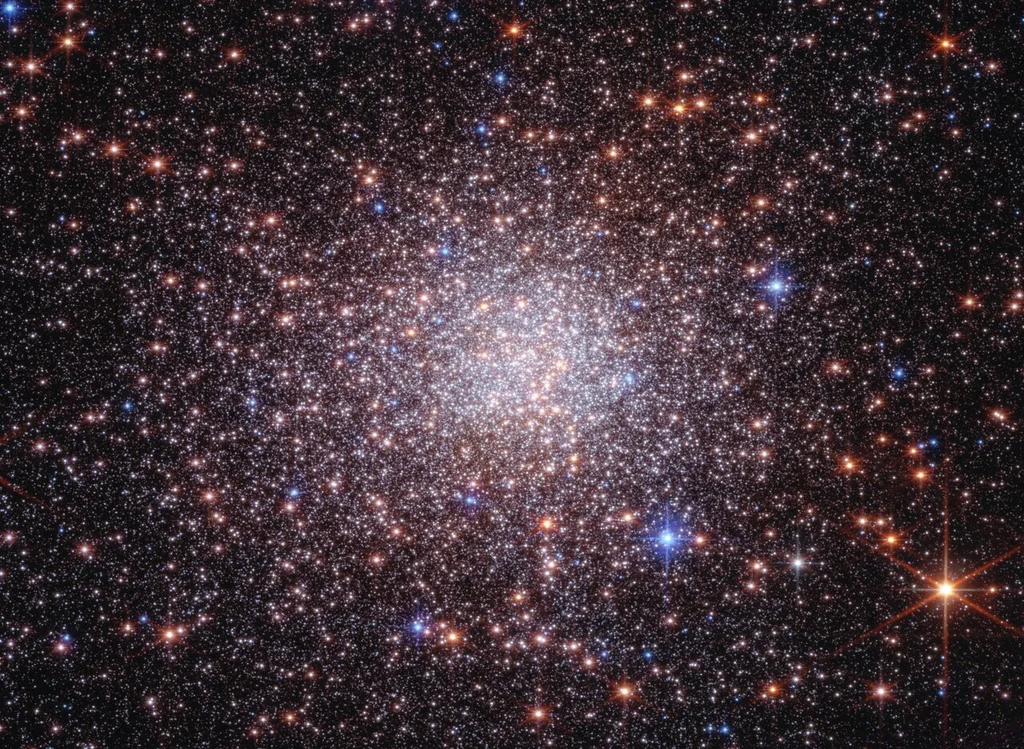
Webb and Hubble’s view of Terzan 5.
NASA, ESA, CSA, STScI, G. Zullo (University of Bologna), F. R. Ferraro (University of Bologna). Image Processing: A. Pagan (STScI) · License
Webb and Hubble observations point to as many as four episodes of star formation in Terzan 5. That history supports classifying it as a surviving fragment of the Milky Way’s early bulge and explains why an ordinary globular-cluster label fell short.
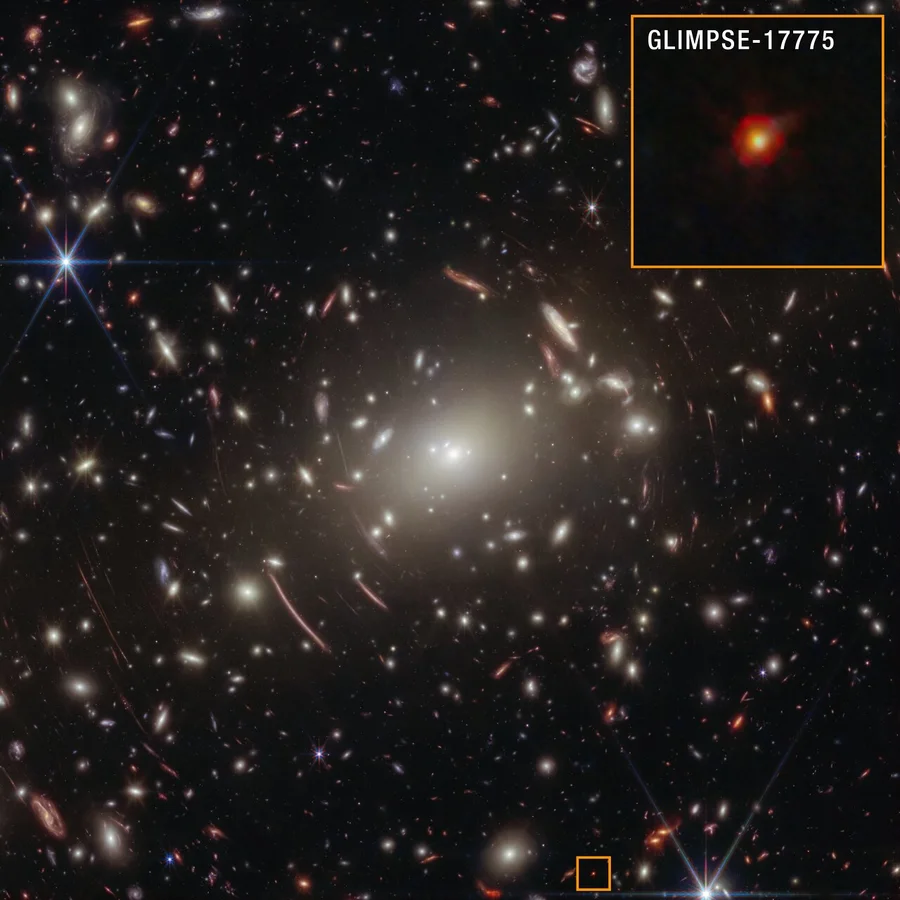
The annotated Webb image identifies GLIMPSE-17775 behind the Abell S1063 cluster.
NASA, ESA, CSA, V. Kokorev (University of Texas at Austin), A. Pagan (STScI) · License
Webb’s spectrum of GLIMPSE-17775 supports the idea that a growing supermassive black hole is shrouded in dense gas. This is evidence about one object. Researchers still need to see whether the same explanation fits other little red dots.
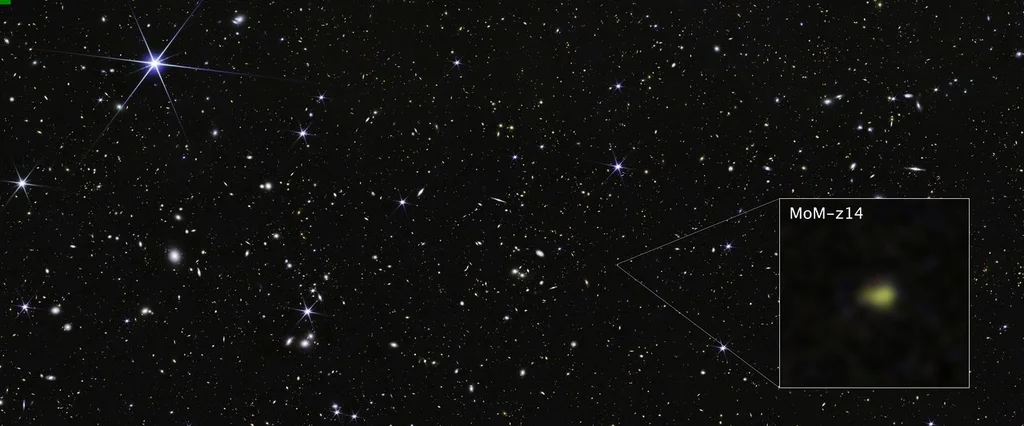
Webb’s COSMOS field with the distant galaxy MoM-z14 identified.
NASA, ESA, CSA, STScI, R. Naidu (MIT), Image Processing: J. DePasquale (STScI) · License
Webb spectroscopy confirmed that MoM-z14 was already shining about 280 million years after the Big Bang. Its brightness and early appearance give galaxy-formation models a concrete benchmark. The observation does not on its own imply a different age for the universe.
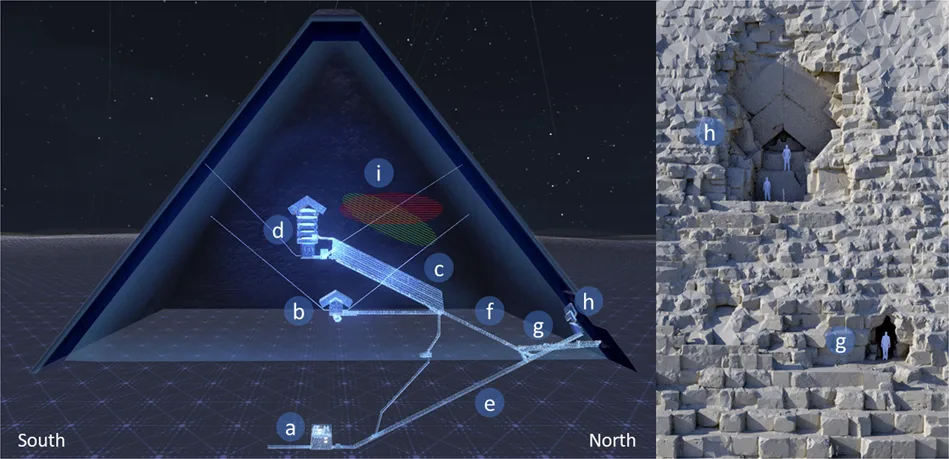
The 2023 ScanPyramids study located the corridor behind the north-face chevrons.
Procureur et al., Nature Communications, Fig. 1 (resized) · License
Particles called muons pass through empty space more readily than stone. Researchers counted them from multiple positions and mapped a corridor behind the north face. Its original purpose remains open.
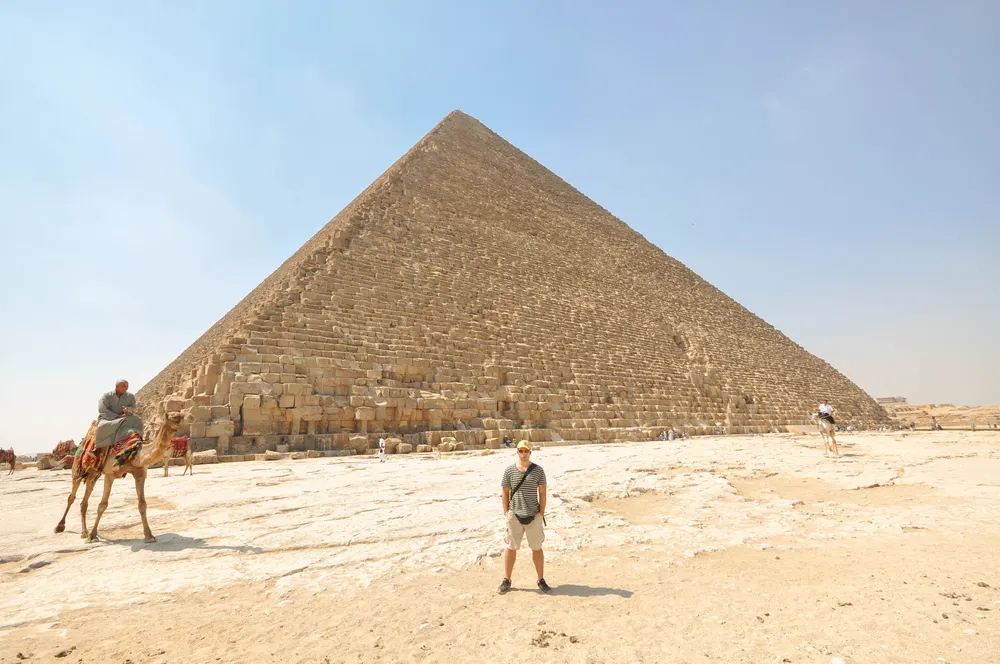
The Great Pyramid of Khufu at Giza.
Physicists simulated how external radio waves could scatter and concentrate in an idealized model of the pyramid. The study examined the shape’s response to incoming waves. It offers no archaeological evidence of a battery or power plant.
The video explains how particles map the pyramid’s interior. The paper below models its response to radio waves.