A companion star exposes a missing black hole in Omega Centauri
Read the original source · NASA Science · Original research release
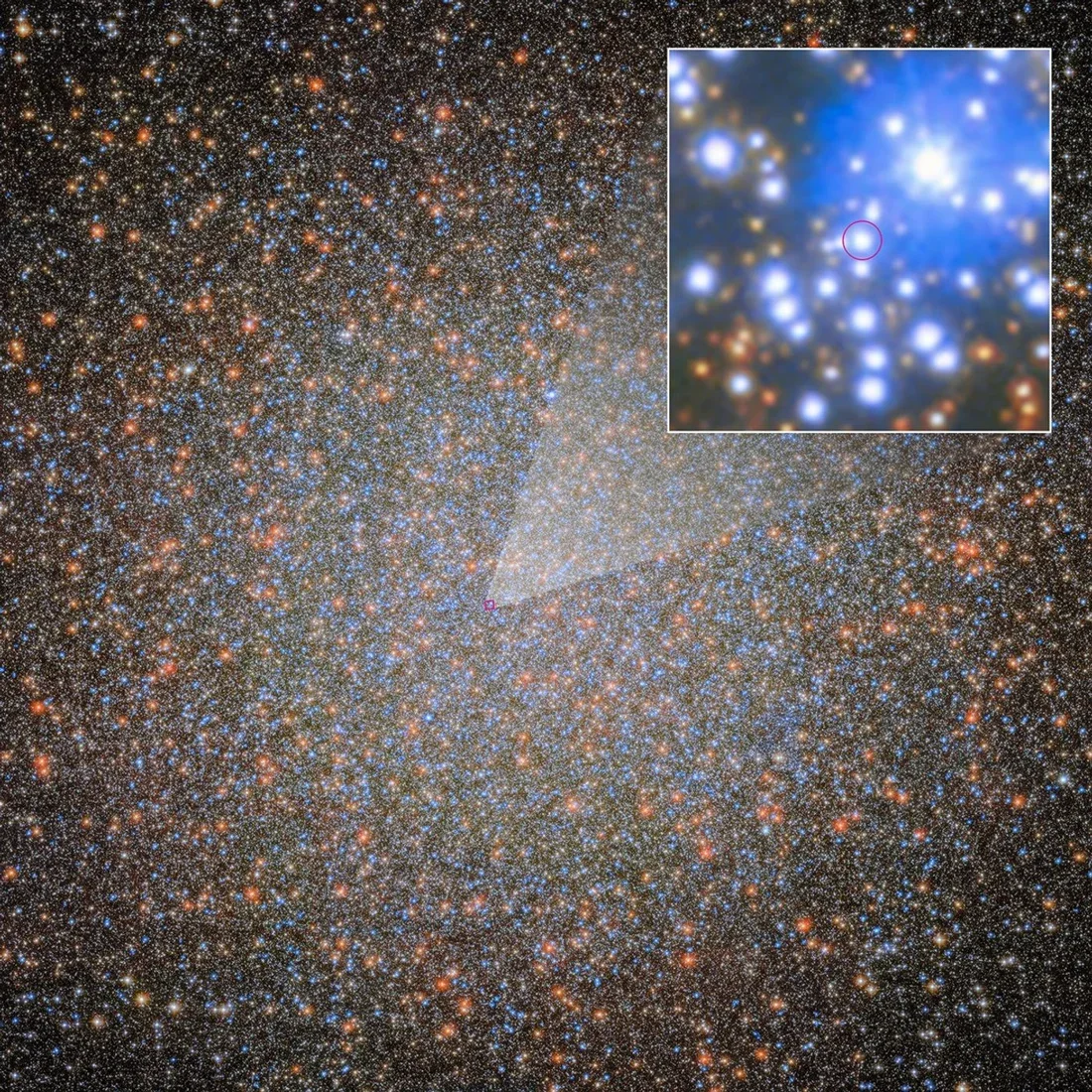
Hubble’s Omega Centauri image marks the visible companion used to infer the stellar-mass black hole.
Source summary
Astronomers tracked a visible star for more than twenty years with Hubble and Webb observations. Its motion reveals a companion about 4.46 times the Sun’s mass, identifying the first stellar-mass black hole found in Omega Centauri. The result improves an earlier neutron-star interpretation and helps test predicted hidden black-hole populations.