Why the Lycurgus Cup changes from green to red
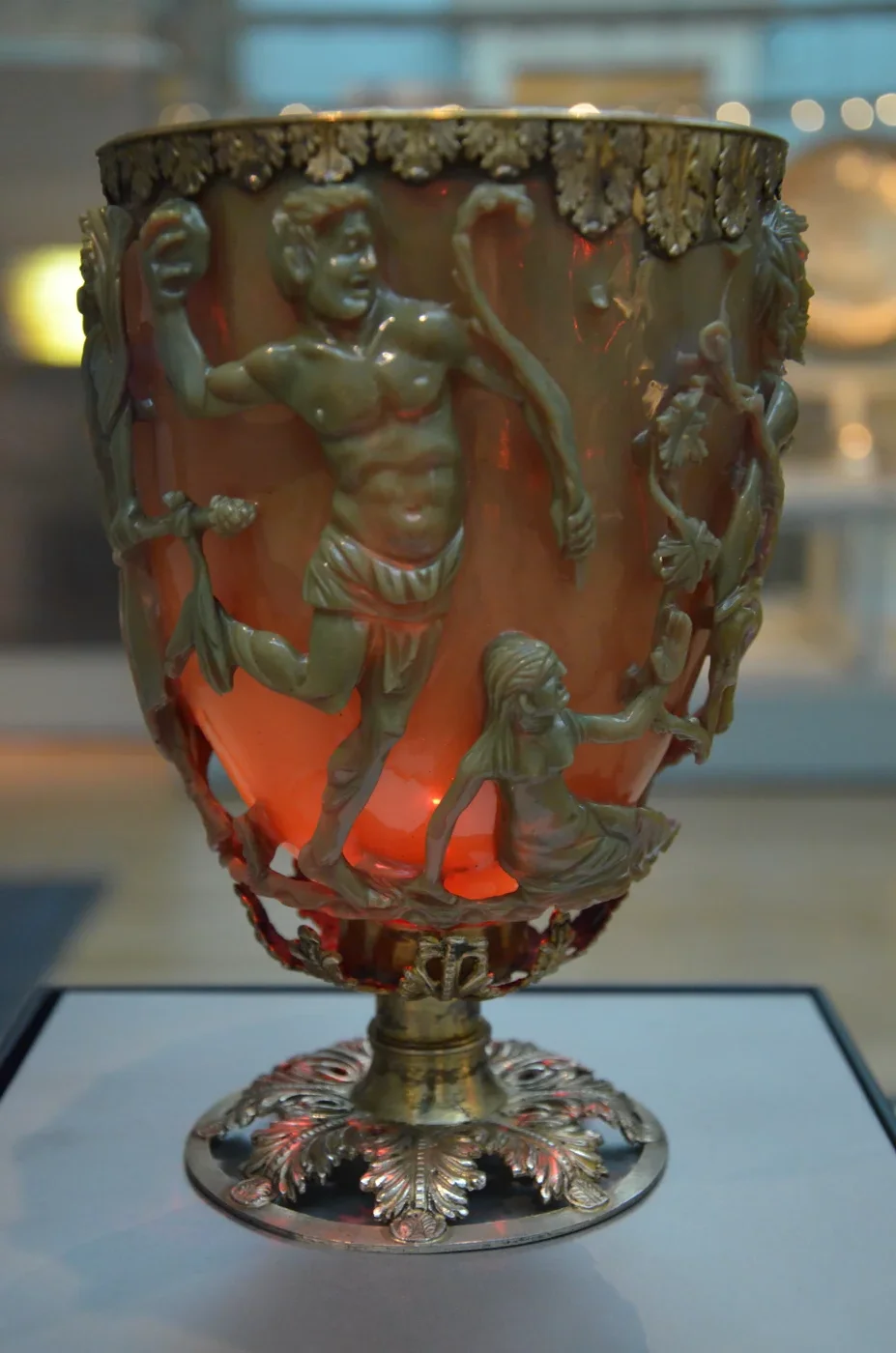
The Lycurgus Cup displayed with red light transmitted through its glass; the metal mounts are later additions.
Source summary
Microscopy identified tiny silver–gold alloy particles inside the fourth-century Roman glass. They account for its different appearance in reflected and transmitted light. The surviving material explains the optical effect; the original production recipe and how consistently glassworkers controlled it remain less certain. Calling it nanotechnology describes its particle scale, not proof of modern scientific knowledge.