Geminid Meteor Shower 2026: Peak Dates and How to Watch
Read the original source · NASA · 2026 Geminids dates, expected rates and viewing tips
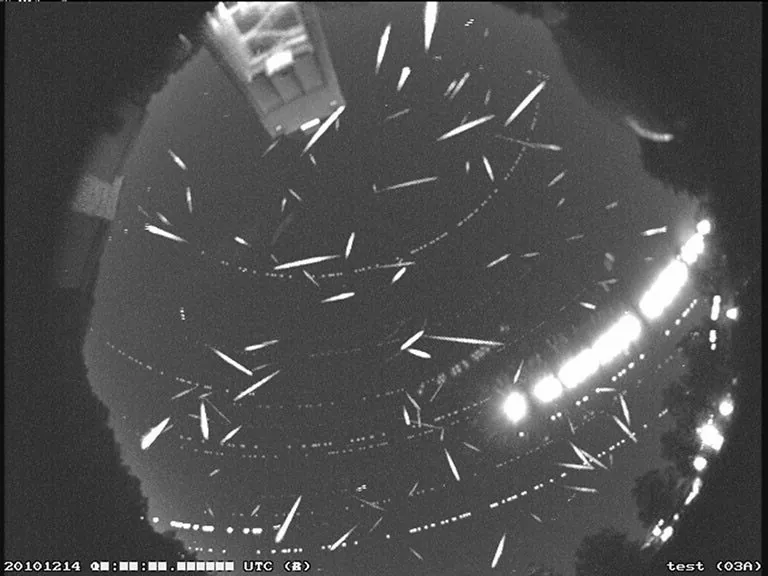
NASA combined exposures from the 2014 Geminid peak. The composite shows many meteors recorded over time.
NASA/MSFC/Danielle Moser, NASA’s Meteoroid Environment Office (resized) · License
What we know
The 2026 Geminid meteor shower peaks December 13–14. For the continental U.S., start looking after 9 or 10 p.m. local time on Sunday and stay out later if skies are clear.
What night is best for the 2026 Geminids?
Plan for Sunday night, December 13, into Monday morning, December 14. Check the hourly cloud forecast before heading out. If clouds cover the peak, try a clear night nearby. NASA lists the shower as active December 4–17, with lower rates away from the peak.
What time should you go outside?
Start with a 30–60 minute session after 9 or 10 p.m. local time. If you can stay up, try again after midnight or before dawn, when Gemini is higher for many Northern Hemisphere observers. The American Meteor Society expects a thin waxing crescent near the peak, so moonlight should be less of a problem than during a full Moon.
Where should you look?
Use your eyes and pick a spot with a broad, dark view away from bright lights. In New Hampshire, look for a legal viewing spot away from town lights and check nighttime access before you leave. Give your eyes about 30 minutes to adjust. The meteors appear to radiate from Gemini, but the streaks can cross any part of the sky, so look broadly overhead. Binoculars and telescopes show too little sky for this.
How many meteors might you see?
NASA lists about 40–50 meteors per hour under dark skies near the peak. Expect fewer under streetlights, with partial clouds, or during a short outing. The larger rates sometimes quoted for the Geminids assume ideal observing conditions and a radiant high in the sky.
What causes the Geminids?
Earth crosses debris from 3200 Phaethon, a rocky object that passes unusually close to the Sun. We see a meteor when a grain encounters the atmosphere and produces a flash. Most familiar showers trace back to comets, which makes Phaethon an unusual parent body.