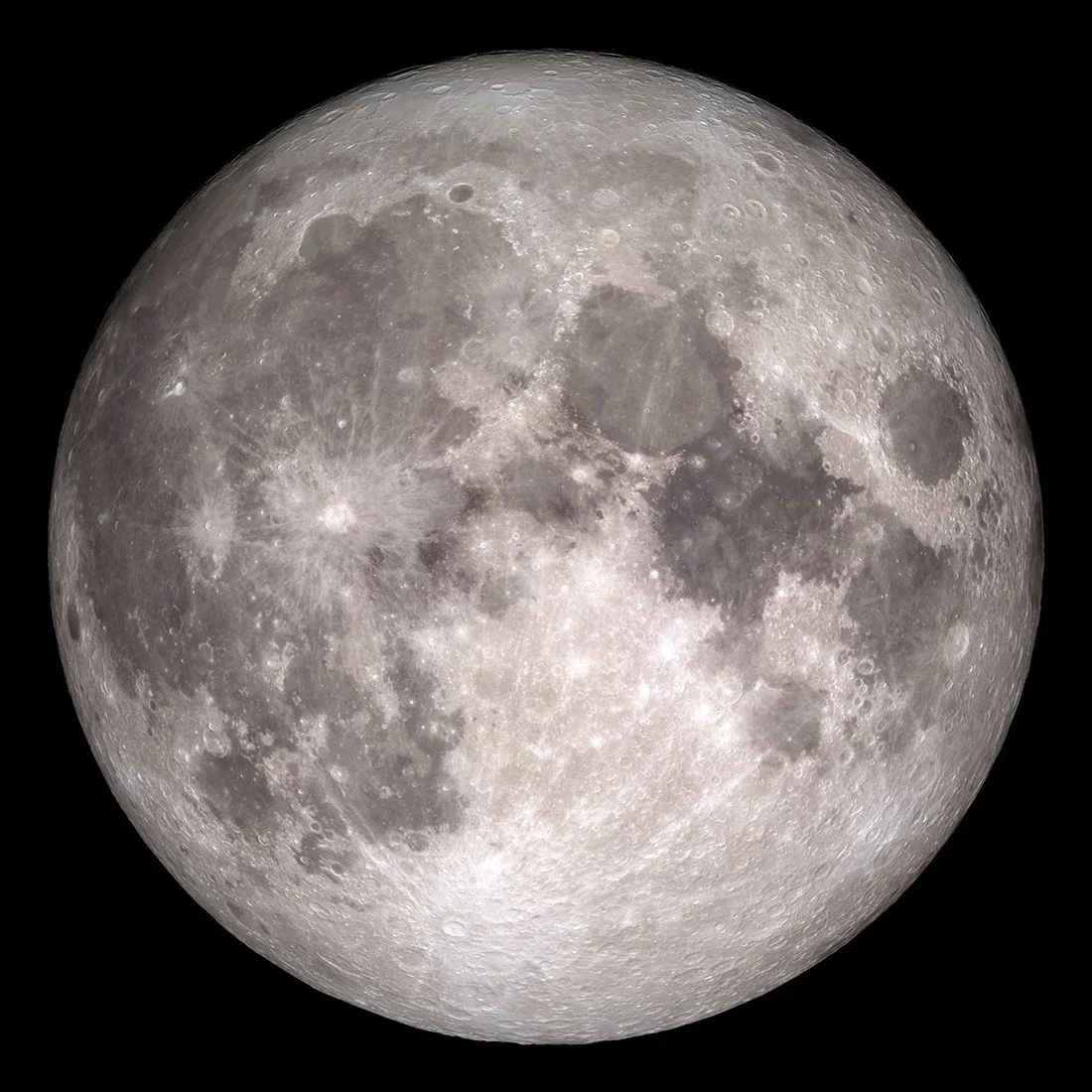
The Moon
Look for the dark plains and bright craters on our nearest neighbor.
How to spot it
Start with your eyes. With binoculars, look along the boundary between light and shadow, where craters and mountains stand out.
Find a dark, open spot. Give your eyes 20–30 minutes to adjust. One fist at arm’s length spans about 10°.
Check your location to find a target above your horizon.
Visibility depends on your location and time.
Look for the dark plains and bright craters on our nearest neighbor.
Start with your eyes. With binoculars, look along the boundary between light and shadow, where craters and mountains stand out.
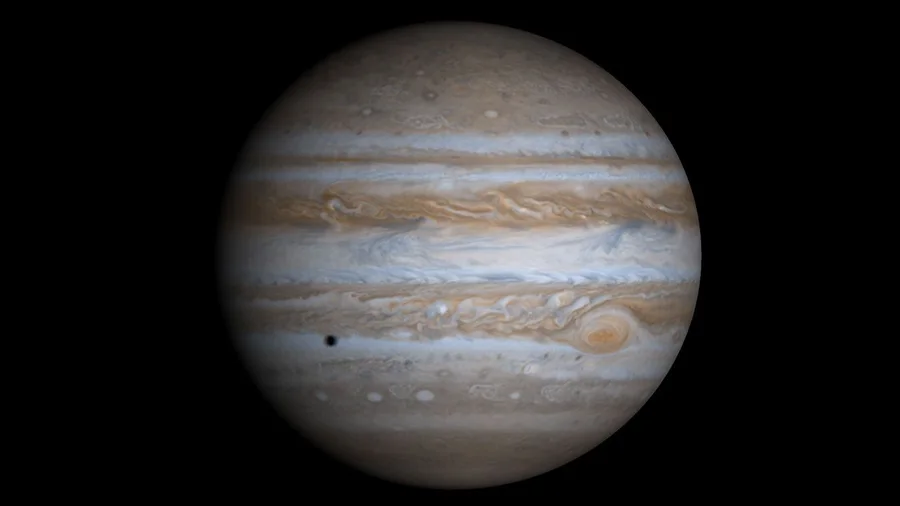
The largest planet often looks like a bright point of light.
Run Check Tonight for Jupiter’s direction. If Jupiter is up, steady a pair of binoculars and look for tiny points beside it. You may see some of its four largest moons.
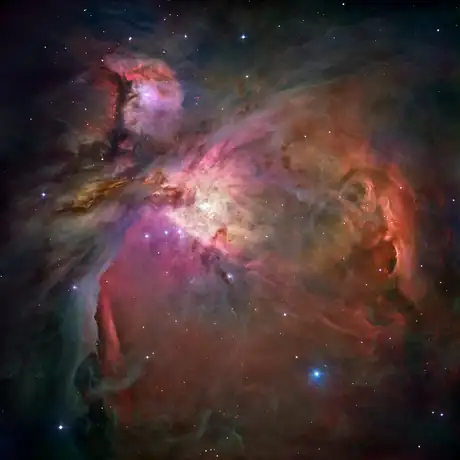
A stellar nursery in the sword of Orion, pictured here by Hubble.
Find the three bright stars of Orion’s Belt. Look for a faint fuzzy patch halfway down the short line of stars hanging below the belt. Try binoculars or a dark site.
NASA, ESA, M. Robberto (STScI/ESA) and the Hubble Space Telescope Orion Treasury Project Team
Join the waitlist for a free weekly email with three things to look for and when to see them.
Loading the Moon phase calendar…
More space tools and trackers · Save your sightings with a free account